
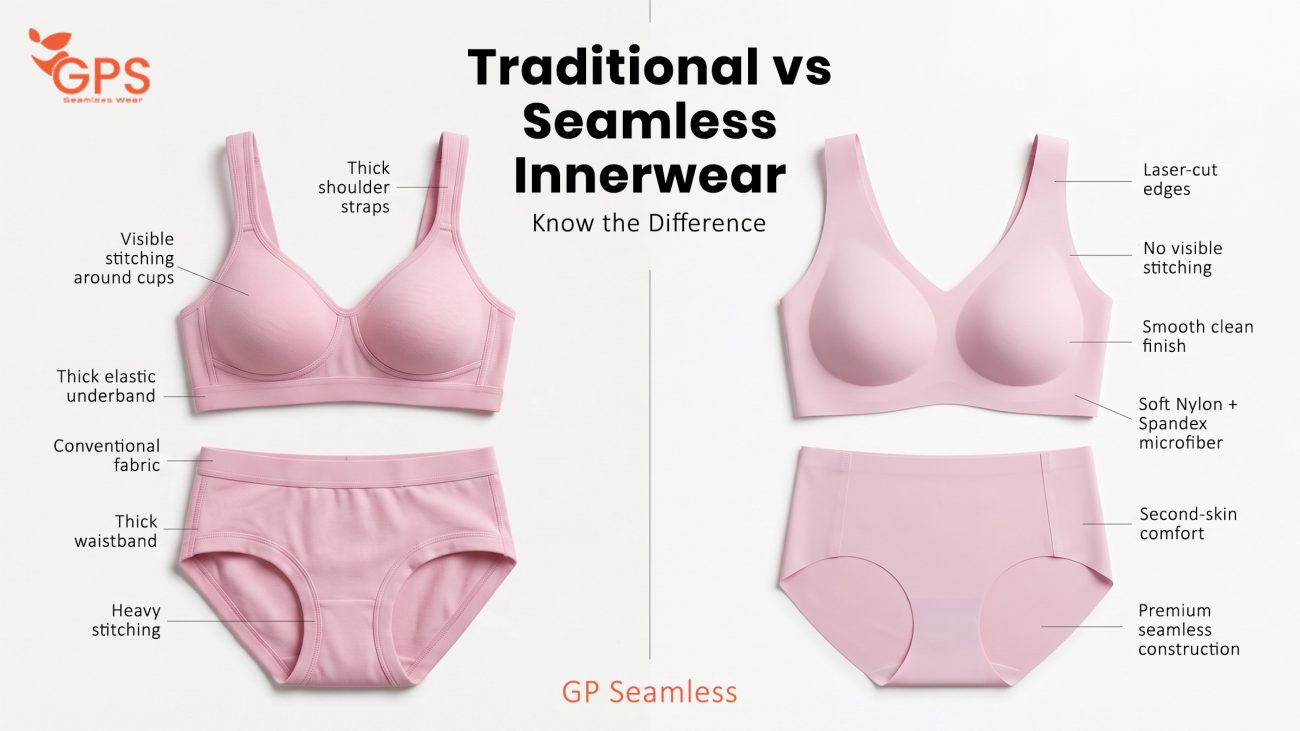
Choosing the right innerwear is just as important as selecting the perfect outfit. Although many people focus on style and fabric, the construction of the garment plays an equally significant role. Today, one comparison continues to gain attention—traditional vs seamless innerwear.
Traditional innerwear has been a wardrobe staple for decades. However, seamless innerwear has transformed the industry with its innovative manufacturing process and superior comfort. Unlike conventional garments that rely on stitched seams, seamless garments are knitted as a single piece using advanced circular knitting technology. As a result, they provide a smoother fit, enhanced flexibility, and a barely-there feel.
Moreover, consumers are increasingly choosing seamless bras, panties, camisoles, shapewear, and activewear because they combine functionality with modern aesthetics. Since they eliminate bulky stitching, these garments remain invisible under clothing while offering excellent stretch and breathability.
In this guide, we’ll compare traditional and seamless innerwear in detail. We’ll explore their construction, comfort, durability, appearance, and ideal use cases. Whether you’re a shopper looking for everyday comfort or a business planning to launch a private-label collection, this comparison will help you make an informed decision.
What Is Traditional Innerwear?
Traditional innerwear refers to garments manufactured by cutting fabric panels and stitching them together. This method has been used for many years across bras, panties, slips, camisoles, and shapewear.
Typically, these garments feature:
-
- Multiple stitched fabric panels
-
- Elastic waistbands and underbands
-
- Visible seams
-
- Conventional cup construction
-
- Sewn shoulder straps
-
- Thread-based finishing
Although traditional garments remain widely available, stitched construction often creates pressure points that become noticeable after long hours of wear. Furthermore, visible seams may show through fitted clothing, affecting the overall appearance.
Traditional innerwear still serves many consumers well. Nevertheless, advances in textile technology have introduced alternatives that provide a cleaner and more comfortable experience.
What Is Seamless Innerwear?
Seamless innerwear is manufactured using advanced computerized circular knitting machines. Instead of stitching several fabric pieces together, the garment is produced as a nearly complete unit.
Because of this manufacturing process, seamless garments feature:
-
- Minimal or no visible seams
-
- Four-way stretch
-
- Lightweight construction
-
- Soft nylon-spandex blends
-
- Smooth laser-cut or bonded edges
-
- Body-contouring fit
Consequently, seamless garments move naturally with the body. They also reduce friction, improve flexibility, and create a sleek silhouette under clothing.
As fashion trends continue to favor fitted outfits, seamless innerwear has become the preferred choice for consumers seeking both comfort and confidence.
Traditional vs Seamless Innerwear: A Detailed Comparison
| Feature | Traditional Innerwear | Seamless Innerwear |
|---|---|---|
| Construction | Multiple stitched panels | Circular knitted construction |
| Seams | Visible stitching | Minimal or no seams |
| Comfort | Moderate | Excellent |
| Stretch | Limited | Four-way stretch |
| Breathability | Depends on fabric | High |
| Appearance | Stitch lines may show | Invisible under clothing |
| Fit | Structured | Body-hugging |
| Weight | Slightly heavier | Lightweight |
| Flexibility | Moderate | Excellent |
| Everyday Wear | Good | Outstanding |
Comfort: The Biggest Difference
Comfort is one of the primary reasons consumers switch to seamless garments.
Traditional garments often include stitched edges, elastic bands, and reinforced seams. While these features provide structure, they may also create pressure around sensitive areas. Consequently, prolonged wear can sometimes lead to discomfort.
Seamless garments distribute pressure more evenly across the body. Because there are fewer seams, the fabric feels softer against the skin. In addition, high-quality nylon-spandex blends offer excellent stretch without feeling restrictive.
Many people describe seamless innerwear as feeling like a second skin because it adapts naturally to body movement.
Why Seamless Innerwear Looks Better Under Clothes
Modern fashion often includes body-hugging dresses, leggings, skirts, formal trousers, and lightweight fabrics. Therefore, visible panty lines and bra seams can become noticeable.
Seamless garments solve this issue through their clean construction.
Benefits include:
-
- Invisible under leggings
-
- Smooth finish beneath dresses
-
- Clean silhouette
-
- No bulky stitching
-
- Better confidence while wearing fitted outfits
As a result, seamless innerwear has become especially popular among professionals, travelers, fitness enthusiasts, and fashion-conscious consumers.
Fabric Technology Makes the Difference
The manufacturing process is only one part of the equation. Fabric selection also contributes significantly to comfort and durability.
Many seamless garments use premium blends such as:
-
- Nylon
-
- Spandex
-
- Microfiber
-
- Elastane
-
- Moisture-wicking yarns
These fabrics provide excellent elasticity while maintaining their shape after repeated washing.
Traditional garments may also use similar fabrics. However, stitched construction often limits the overall stretch and flexibility of the finished product.
Breathability and Moisture Management
Another major advantage of seamless garments is their ability to improve airflow.
Many seamless knitting techniques incorporate breathable knit zones that enhance ventilation. Consequently, heat and moisture escape more efficiently during daily activities.
This feature is particularly useful for:
-
- Office wear
-
- Summer climates
-
- Yoga
-
- Gym workouts
-
- Travel
-
- Long working hours
Since breathable fabrics help keep the skin dry, they also contribute to overall wearing comfort throughout the day.
Flexibility for Everyday Movement
People rarely remain stationary throughout the day. Walking, bending, stretching, commuting, and exercising all require garments that move with the body.
Traditional stitched seams may restrict movement because different fabric panels respond differently under tension.
In contrast, seamless garments provide:
-
- Better mobility
-
- Uniform stretch
-
- Improved recovery
-
- Reduced bunching
-
- Enhanced freedom of movement
Whether you’re working from home, traveling, attending meetings, or exercising, seamless innerwear adapts effortlessly to your routine.
Durability and Long-Term Performance
Durability depends on both fabric quality and manufacturing techniques.
Traditional garments may experience wear at stitched areas over time, especially after repeated washing and stretching.
Seamless garments reduce this concern because fewer stitched components mean fewer stress points.
When manufactured using premium yarns and advanced knitting technology, seamless garments maintain:
-
- Shape retention
-
- Elastic recovery
-
- Fabric softness
-
- Color consistency
-
- Structural integrity
Proper washing and care further extend the lifespan of both garment types.


Leave a comment
You must be logged in to post a comment.